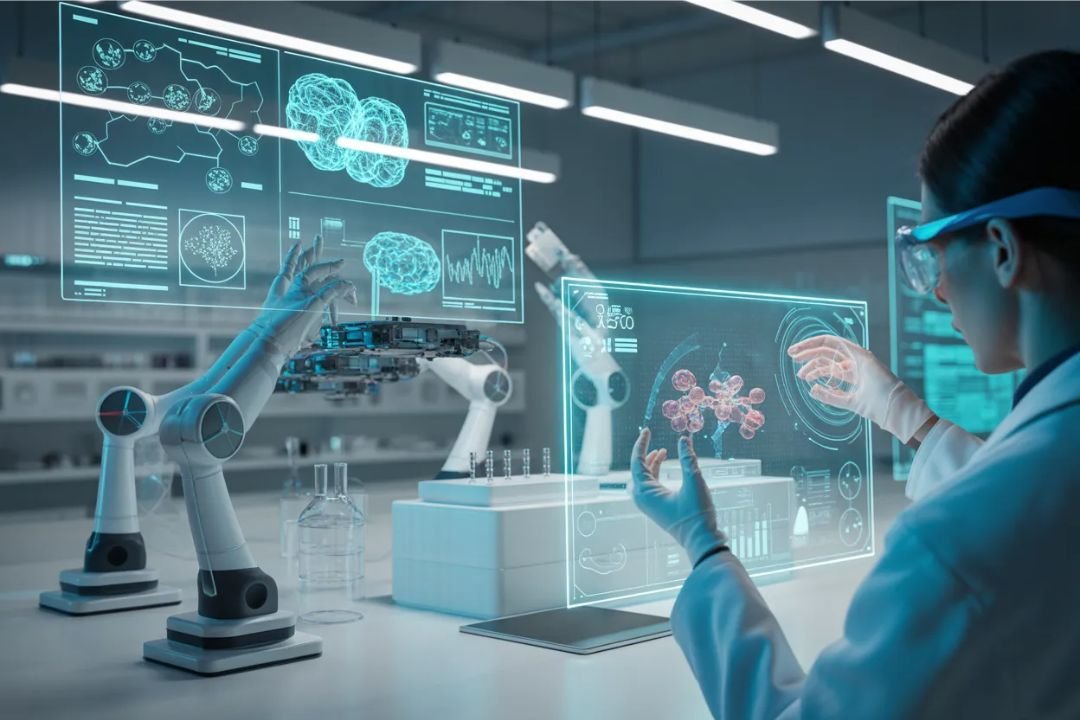
The year 2026 marks an era of rapid technological advancement that is reshaping industries, economies, and daily life. From Artificial Intelligence and quantum computing to sustainable energy and immersive experiences, several emerging technologies are set to transform the world as we know it. Understanding these technologies can help individuals, businesses, and governments prepare for the future.
This article explores the top 10 future technologies in 2026 that are likely to have the biggest impact globally.
1. Artificial Intelligence (AI) and Generative AI
AI continues to dominate as a transformative technology, powering intelligent applications across industries.
Key Highlights:
- Generative AI for text, images, video, and software development
- AI-driven predictive analytics for healthcare, finance, and marketing
- Intelligent virtual assistants for productivity and customer support
- Ethical and responsible AI frameworks
Impact: AI automates repetitive tasks, improves decision-making, and enhances creativity across sectors.
2. Quantum Computing
Quantum computing is moving from theoretical research to practical applications, solving problems that classical computers cannot.
Key Highlights:
- Quantum processors capable of complex simulations
- Quantum-safe encryption for cybersecurity
- Accelerated drug discovery, climate modeling, and materials science research
Impact: Enables breakthrough innovations in science, security, and advanced problem-solving.
3. Extended Reality (XR) – AR, VR, and Mixed Reality
XR technologies are revolutionizing education, entertainment, and remote collaboration.
Key Highlights:
- Virtual classrooms and immersive training simulations
- AR-enabled shopping, advertising, and interactive experiences
- Mixed Reality workspaces for hybrid teams
Impact: Provides immersive experiences that enhance learning, collaboration, and engagement.
4. Web3 and Blockchain
Blockchain and Web3 technologies are changing digital ownership, finance, and governance.
Key Highlights:
- NFTs for digital asset ownership and monetization
- Decentralized finance (DeFi) for peer-to-peer financial systems
- Blockchain-based identity verification and secure data storage
- DAO platforms for community governance
Impact: Empowers users with transparency, control, and secure digital interactions.
5. 5G, 6G, and Next-Generation Connectivity
High-speed networks are enabling real-time applications and connected devices at an unprecedented scale.
Key Highlights:
- Ultra-low latency for gaming, AR/VR, and remote operations
- Expansion of smart cities and IoT ecosystems
- Cloud computing and edge computing for faster processing
Impact: Improves connectivity, supports real-time innovation, and enhances digital experiences globally.
6. AI-Driven Robotics and Automation
Robotics combined with AI is transforming manufacturing, logistics, healthcare, and everyday life.
Key Highlights:
- Autonomous drones, delivery robots, and industrial robots
- Intelligent supply chain and warehouse automation
- AI-powered home assistants and service robots
Impact: Increases efficiency, reduces costs, and allows humans to focus on creative and strategic work.
7. Sustainable and Green Technology
Sustainability is driving innovation, leading to eco-friendly solutions and energy efficiency.
Key Highlights:
- Renewable energy systems and smart grids
- Electric and autonomous vehicles reducing emissions
- Energy-efficient AI algorithms and data centers
- Carbon tracking and environmental monitoring tools
Impact: Promotes environmental responsibility and reduces the global carbon footprint.
8. Biotechnology and Personalized Medicine
Biotech advancements are revolutionizing healthcare and human longevity.
Key Highlights:
- Gene editing and CRISPR-based therapies
- AI-assisted diagnostics and telemedicine
- Personalized treatment plans based on genetics
- Regenerative medicine and lab-grown organs
Impact: Improves health outcomes, extends life expectancy, and makes healthcare more personalized.
9. Cybersecurity and Privacy Technologies
As technology expands, advanced cybersecurity innovations are crucial for protecting data and infrastructure.
Key Highlights:
- AI-powered threat detection and prevention
- Quantum-resistant encryption
- Privacy-focused digital tools and behavioral analytics
- Real-time incident response systems
Impact: Ensures data safety, strengthens trust, and prevents cyberattacks.
10. Human-Computer Interfaces and Brain-Computer Technology
Next-generation interfaces will bridge the gap between humans and machines, enhancing control and interaction.
Key Highlights:
- Neural interfaces and wearable sensors
- AI-driven adaptive user interfaces
- Haptic feedback and immersive control systems
- Brain-computer interfaces for medical and productivity applications
Impact: Enhances accessibility, productivity, and interaction with digital and physical environments.
🔹 Conclusion
The technologies emerging in 2026 are reshaping industries, everyday life, and global society. From AI and quantum computing to XR, Web3, and sustainable innovations, the next decade promises a world that is smarter, faster, and more connected than ever before.
Adopting these technologies responsibly will unlock opportunities, boost productivity, and improve quality of life, making them essential for businesses, creators, and individuals aiming to thrive in the rapidly evolving digital landscape.
Pro Tip: Keep an eye on AI, quantum computing, immersive technologies, and sustainability-focused innovations. Early adoption and experimentation with these technologies will provide a competitive edge and prepare you for the next decade of digital transformation.