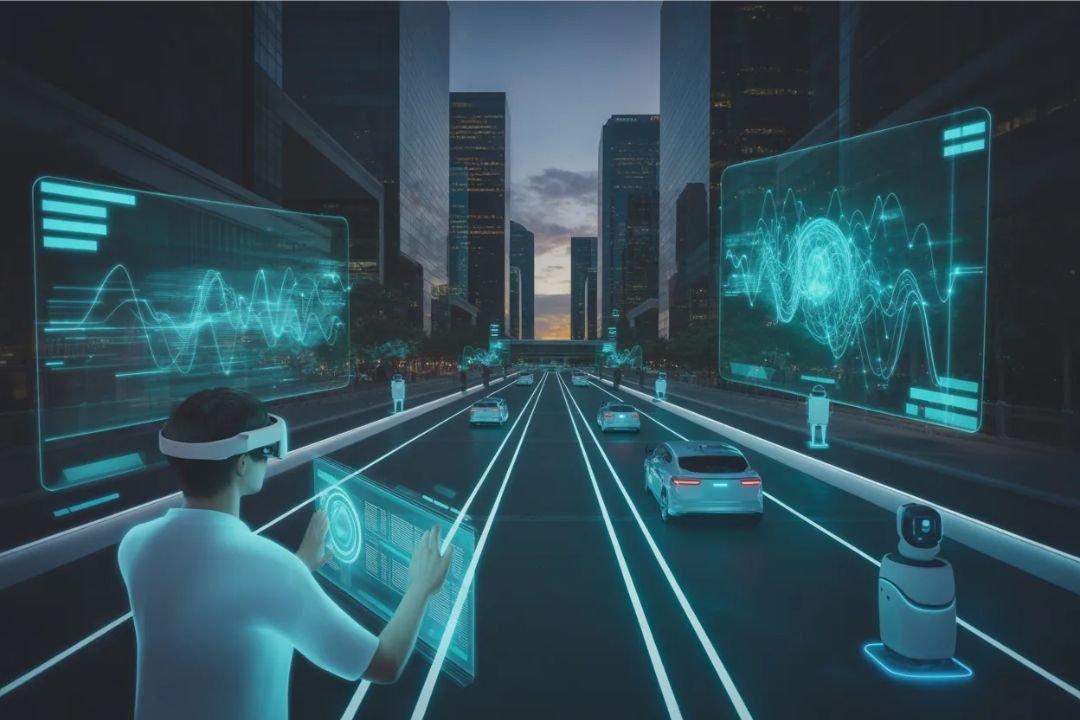
In 2026, Robotics and Artificial Intelligence (AI) are no longer futuristic concepts—they are driving forces behind innovation in industries, healthcare, education, and daily life. The integration of AI with robotics is creating smarter, more adaptive, and highly efficient systems that are transforming the way we work, learn, and interact with technology.
This article explores how robotics and AI are shaping the next generation of innovation, highlighting their applications, benefits, and the future they are creating.
🔹 1. AI-Powered Robotics: The Future of Automation
The combination of AI and robotics has enabled machines to perform complex tasks autonomously.
Key Developments:
- Industrial robots with AI-based decision-making
- Automated logistics and warehouse management
- Robotic process automation (RPA) in offices
- Collaborative robots (“cobots”) working alongside humans
Impact: Businesses save time, reduce errors, and improve productivity, while humans focus on creative and strategic tasks.
🔹 2. Robotics in Healthcare
AI-driven robots are transforming healthcare by enhancing precision, efficiency, and patient care.
Key Developments:
- Surgical robots capable of ultra-precise operations
- Robotic exoskeletons assisting physical therapy and mobility
- AI-powered diagnostic robots analyzing scans and patient data
- Telepresence robots for remote medical consultations
Impact: Improves medical outcomes, reduces human error, and makes healthcare more accessible.
🔹 3. Robotics in Education and Training
Educational robotics combined with AI is making learning interactive and personalized.
Key Developments:
- AI tutors embedded in educational robots
- Hands-on learning through robotics kits and simulations
- VR/AR-enabled robotic training platforms for skills development
- Adaptive learning systems that respond to student progress
Impact: Encourages creativity, critical thinking, and hands-on skills while making education more engaging.
🔹 4. AI in Robotics for Daily Life
Robotics powered by AI is increasingly integrated into everyday personal and professional environments.
Key Developments:
- Smart home robots for cleaning, security, and assistance
- Delivery drones and autonomous transportation
- AI-powered personal assistants and companion robots
- Robotics in retail for inventory management and customer support
Impact: Enhances convenience, productivity, and safety in daily life.
🔹 5. Robotics and AI in Manufacturing
The industrial sector has been revolutionized by smart factories and AI-driven production lines.
Key Developments:
- Predictive maintenance using AI sensors in robots
- Real-time quality control and defect detection
- Autonomous production lines adapting to demand and resource availability
- Collaborative robots enhancing human-robot teamwork
Impact: Increases efficiency, reduces downtime, and lowers production costs.
🔹 6. AI-Enhanced Robotics for Research and Innovation
Research across various fields is accelerated by robotics and AI working together.
Key Developments:
- AI-guided robotic experiments in chemistry, biology, and materials science
- Robotic exploration in extreme environments like oceans and space
- Automated data collection and analysis in laboratories
- AI-driven prototypes for engineering and product development
Impact: Accelerates innovation cycles and enables discoveries impossible for humans alone.
🔹 7. Robotics and AI in Transportation
Autonomous vehicles and AI-powered robotics are reshaping mobility and logistics.
Key Developments:
- Self-driving cars and trucks with AI navigation systems
- AI-controlled drones for delivery and surveillance
- Robotics-assisted traffic management and smart city integration
- Predictive maintenance for transportation fleets
Impact: Improves safety, efficiency, and accessibility in transportation networks.
🔹 8. Ethical and Responsible AI Robotics
As robotics and AI advance, ethical considerations are becoming crucial.
Key Developments:
- AI safety protocols and fail-safes in robotics
- Transparency and accountability in autonomous systems
- Human oversight in decision-making for critical applications
- Guidelines for AI in healthcare, law enforcement, and social contexts
Impact: Ensures trust, safety, and responsible use of advanced robotics.
🔹 9. Future Innovations on the Horizon
The next decade will see even more advanced AI-driven robotics, including:
- Fully autonomous factories and logistics networks
- AI-powered humanoid robots for caregiving and companionship
- Swarm robotics for disaster response and environmental monitoring
- Integration of robotics with brain-computer interfaces (BCI)
Impact: These innovations will redefine work, healthcare, and personal assistance on a global scale.
🔹 Conclusion
In 2026, robotics and AI are the cornerstone of next-generation innovation. From transforming industries and healthcare to enhancing daily life and education, AI-driven robotics is improving efficiency, accuracy, and accessibility while enabling humans to focus on creativity and complex problem-solving.
The integration of AI with robotics is not just shaping technology—it is reshaping the future of human potential.
Pro Tip: Embrace AI and robotics in your professional or personal life by exploring AI-powered tools, robotics kits, or automation solutions. Early adoption will provide a competitive edge and prepare you for the future of innovation.