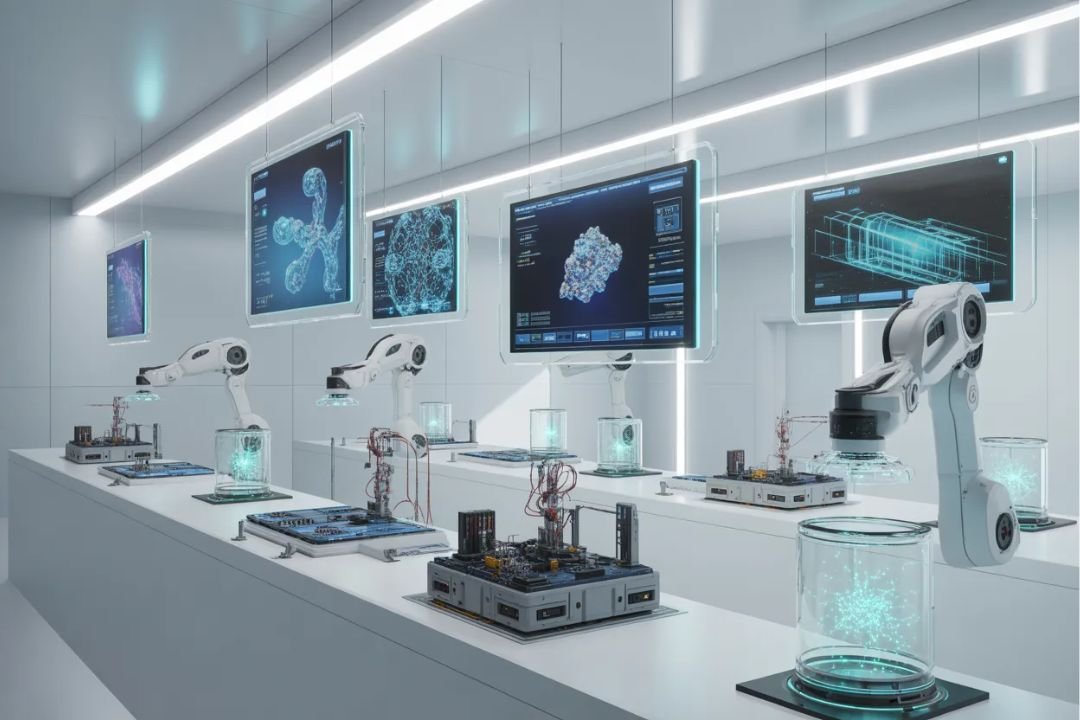
Space exploration in 2026 is entering a new era of innovation, with advancements in propulsion, robotics, AI, and satellite technology enabling missions that were once considered science fiction. Governments, private companies, and international collaborations are pushing the boundaries of human knowledge, exploring planets, moons, and deep space like never before.
This article explores the latest space exploration technologies, upcoming missions, and breakthroughs that are set to redefine our understanding of the cosmos.
🔹 1. AI and Robotics in Space Missions
Artificial Intelligence and robotics are at the forefront of modern space exploration.
Key Developments:
- Autonomous spacecraft navigation for long-duration missions
- AI-powered analysis of astronomical data in real-time
- Robotics for planetary surface exploration, sample collection, and maintenance of space stations
- Swarm robotics for asteroid mining and lunar construction
Impact: Reduces human risk, accelerates data collection, and enables exploration in environments inhospitable to humans.
🔹 2. Advanced Propulsion Systems
Next-generation propulsion technologies are making faster and more efficient travel in space possible.
Key Developments:
- Ion thrusters and plasma propulsion for deep space missions
- Nuclear thermal propulsion for crewed Mars and lunar missions
- Breakthroughs in reusable rocket technologies for cost-efficient launches
- Hybrid chemical-electric propulsion systems for interplanetary exploration
Impact: Shortens travel time, reduces mission costs, and allows spacecraft to reach farther destinations.
🔹 3. Lunar Missions and Habitation
The Moon is becoming a strategic hub for scientific research and future human settlement.
Key Developments:
- NASA’s Artemis program and international lunar exploration projects
- AI-assisted habitat design for sustainable lunar bases
- Resource utilization technologies, including lunar regolith mining for construction
- Robotic rovers and drones for surface mapping and exploration
Impact: Paves the way for permanent human presence on the Moon and supports deep space exploration.
🔹 4. Mars Exploration and Colonization
Mars continues to be a primary focus for robotic and human exploration.
Key Developments:
- Robotic missions with advanced AI for terrain analysis and sample collection
- Life support and habitat technologies for future human missions
- ISRU (In-Situ Resource Utilization) technologies for water and oxygen extraction
- Mars satellites for communication and real-time data relay
Impact: Prepares for eventual crewed missions and long-term human settlement on Mars.
🔹 5. Satellite Technology & Space Communications
Modern satellites are enabling global connectivity and scientific observation.
Key Developments:
- Low Earth Orbit (LEO) satellite constellations for high-speed internet
- AI-powered Earth observation for climate monitoring, agriculture, and disaster management
- Next-gen deep space communication networks
- Miniaturized satellite technology for cost-effective deployment
Impact: Expands global connectivity, improves data-driven decision-making, and enhances space situational awareness.
🔹 6. Space Telescopes and Astronomy
Advanced telescopes are providing unprecedented views of the universe.
Key Developments:
- Next-generation space telescopes observing in multiple wavelengths
- AI-enhanced imaging for detecting exoplanets and cosmic phenomena
- Gravitational wave observatories for understanding astrophysical events
- Collaboration between space agencies for multi-spectral observation
Impact: Expands human understanding of the cosmos and aids in discovering habitable planets and extraterrestrial phenomena.
🔹 7. Asteroid Mining and Resource Utilization
The commercialization of space is focusing on mining asteroids and extracting valuable resources.
Key Developments:
- AI-guided autonomous mining drones
- Robotics for extracting and processing minerals in zero-gravity
- Technologies to transport resources back to Earth or orbital stations
- Exploration of near-Earth asteroids for rare metals and water
Impact: Opens new economic opportunities and supports sustainability of long-term space missions.
🔹 8. Human Health and Life Support Systems
Innovations in life support are crucial for long-duration space missions.
Key Developments:
- AI-assisted health monitoring for astronauts
- Closed-loop environmental control systems for oxygen, water, and waste management
- Radiation shielding and protective habitats
- Telemedicine and remote surgery capabilities
Impact: Ensures crew safety and viability for missions to Mars, lunar bases, and beyond.
🔹 9. International Collaboration and Space Policy
Global partnerships are accelerating technological advancements and shared space exploration goals.
Key Developments:
- Joint missions between NASA, ESA, ISRO, CNSA, and private companies
- International agreements for space resource management and planetary protection
- Shared AI and robotics platforms for exploration
- Collaborative development of orbital infrastructure
Impact: Reduces costs, increases mission success rates, and ensures responsible use of space resources.
🔹 10. Future Breakthroughs on the Horizon
The coming decade may see radical innovations that redefine space exploration.
Potential Innovations:
- Faster-than-light communication theories and quantum entanglement experiments
- Advanced propulsion enabling crewed missions beyond Mars
- AI-designed space habitats for extreme environments
- Terraforming and large-scale extraterrestrial colonization studies
Impact: Pushes the boundaries of human capability and our understanding of the universe.
🔹 Conclusion
Space exploration technology in 2026 is propelling humanity toward the Moon, Mars, and beyond. Robotics, AI, advanced propulsion, and satellite innovations are making missions safer, faster, and more efficient while opening up opportunities for commercial and scientific ventures.
The next decade promises to reshape our understanding of the cosmos, expand human presence in space, and unlock resources that could support life on Earth and beyond.
Pro Tip: Stay updated on space tech by following missions from NASA, ESA, SpaceX, and other leading space agencies. Understanding AI, robotics, and satellite technologies will be essential for anyone interested in the future of space exploration.