Saving money on a low income can feel almost impossible. When most of your paycheck goes toward rent, groceries, transportation, utilities, debt payments, and other essential expenses, there may seem to be nothing left to put aside.
But saving on a low income is possible. The key is not to follow unrealistic advice or try to eliminate every enjoyable expense. Instead, focus on creating a practical system that helps you reduce unnecessary costs, save small amounts consistently, and improve your financial situation over time.
Whether you are trying to build an emergency fund, pay off debt, prepare for an unexpected expense, or simply stop living paycheck to paycheck, these strategies can help you learn how to save on a low income without making your budget impossible to maintain.
What Does Saving on a Low Income Really Mean?
Saving on a low income does not necessarily mean putting away hundreds of dollars every month.
For some people, saving $10 or $20 per week may be a realistic starting point. For others, saving $50 or $100 each month may be possible.
The important thing is to start with an amount that does not interfere with your essential expenses.
A successful savings plan should help you:
- Cover unexpected expenses
- Reduce financial stress
- Avoid relying on credit for emergencies
- Build better money habits
- Work toward larger financial goals
Your first goal does not have to be a large emergency fund. It can simply be your first $100.
Once you reach that milestone, you can work toward $500, $1,000, and eventually a larger emergency reserve.
1. Start With Your Real Numbers
The first step in saving money on a low income is understanding your current financial situation.
Write down your total monthly income after taxes.
Then list your essential expenses, including:
- Rent or mortgage
- Utilities
- Groceries
- Transportation
- Insurance
- Minimum debt payments
- Phone service
- Necessary medical or personal expenses
Do not estimate if you can avoid it. Use actual numbers from your bank statements and bills.
Once you know how much money you have left after essential expenses, you can create a realistic savings goal.
2. Create a Bare-Bones Budget
When money is tight, a simple budget can be more useful than a complicated budgeting system.
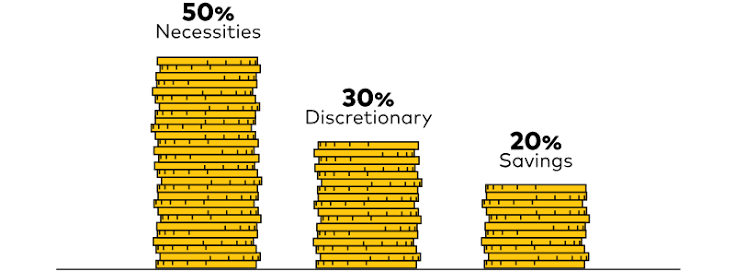
Start by separating expenses into three categories:
Needs: Expenses required for basic living.
Wants: Expenses that improve your lifestyle but are not essential.
Savings and financial goals: Money reserved for emergencies, debt reduction, or future needs.
Your first priority should be covering your basic needs.
After that, look for flexible expenses that can be reduced.
You do not have to eliminate every want. Instead, decide which ones provide enough value to keep.
3. Save Your First $100
If you currently have no savings, do not start by worrying about saving six months of expenses.
Set a smaller target.
Your first goal could be $100.
You can reach it by saving $5, $10, or $20 at a time.
For example, saving $10 per week would give you about $520 over a year.
The first $100 can be psychologically important because it proves that you can create savings even when money is limited.
After reaching $100, set your next target at $250 or $500.
4. Automate Even a Small Amount
Automation can make saving easier.
Set up an automatic transfer from your checking account to your savings account whenever you receive income.
If $50 per paycheck is too much, start with $10.
The amount can increase later.
The purpose is to make saving a habit rather than something you only do when you remember.
Even a small automatic transfer can gradually build a financial cushion.
5. Track Every Expense for 30 Days
If you want to save more, find out where your money is going.
For one month, track every purchase.
Include small expenses such as:
- Coffee
- Snacks
- Takeout
- Online shopping
- Delivery charges
- Entertainment
- Convenience purchases
At the end of the month, look for patterns.
You may discover that one or two categories are taking up more of your income than expected.
Tracking your spending does not mean you have to feel guilty about every purchase. It simply gives you information that can help you make better decisions.
6. Cut Recurring Expenses First
When your income is limited, recurring expenses are worth reviewing because they can create savings every month.
Check your subscriptions and regular bills.
Look at:
- Streaming services
- Gym memberships
- Apps
- Software
- Phone plans
- Internet
- Memberships
- Insurance
Cancel services you do not use.
For bills you need, check whether a cheaper plan is available.
A $15 monthly reduction may seem small, but it equals $180 over a year.
Several small reductions can create meaningful savings.
7. Cook More Meals at Home
Food can be a significant expense, especially when restaurant meals and delivery become regular habits.
Cooking at home does not have to mean preparing complicated meals.
Affordable foods such as rice, pasta, beans, eggs, potatoes, vegetables, oats, and other basic ingredients can be used to create simple meals.
Try planning several meals before grocery shopping.
Preparing extra portions can also give you leftovers for lunch.
You do not have to stop eating out completely. Instead, reduce the frequency and make restaurant spending part of your planned budget.
8. Plan Your Grocery Shopping
Grocery planning can help prevent unnecessary spending.
Before shopping, check your kitchen and make a list of what you already have.
Then create a simple meal plan and buy only what you need.
Look for affordable ingredients that can be used in multiple meals.
Store-brand products may also offer savings when their quality is comparable to name-brand alternatives.
Avoid buying large quantities simply because something is discounted if you are unlikely to use it before it expires.
The cheapest food is not a bargain if it ends up in the trash.
9. Use the 24-Hour Rule
When money is tight, impulse purchases can be especially damaging.
Before buying something that is not essential, wait 24 hours.
For expensive purchases, wait several days if possible.
During the waiting period, ask:
- Do I actually need this?
- Can I afford it without touching my savings?
- Do I already own something similar?
- Will I still want it next week?
- Is this purchase more important than my current financial goal?
A short pause can prevent many unnecessary purchases.
10. Use Free and Low-Cost Activities
Saving money does not mean you have to stop enjoying yourself.
Look for free or inexpensive activities in your community.
Depending on where you live, options may include:
- Public parks
- Libraries
- Walking trails
- Community events
- Free local festivals
- Free museum days
- Home movie nights
- Board games
- Cooking with friends
You can also set aside a small entertainment budget.
Having some money available for fun can make your overall savings plan easier to maintain.
11. Reduce Transportation Costs
Transportation can be a major expense on a limited income.
Review what you spend on fuel, parking, insurance, maintenance, rideshares, and public transportation.
Look for ways to reduce unnecessary trips.
You might be able to:
- Walk for short journeys
- Use public transportation
- Carpool
- Combine errands
- Cycle
- Share rides
- Work remotely when possible
If you own a vehicle, review your insurance and other recurring costs periodically.
Even small transportation savings can make room for additional savings.
12. Use Cash for Problem Categories
If you frequently overspend in a particular category, a cash-based system can help create a clear limit.
For example, you could set aside a fixed amount for entertainment, restaurants, or personal purchases each week.
Once the cash is gone, you stop spending in that category until the next budget period.
This approach is not necessary for everyone, but it can be useful if digital payments make spending feel less noticeable.
13. Save Unexpected Money
When your income is limited, unexpected money can provide a valuable opportunity to build savings.
If you receive a:
- Work bonus
- Tax refund
- Gift
- Commission
- Freelance payment
- Payment from selling unwanted items
consider putting at least part of it into savings.
You do not have to save everything.
For example, you might save 50% and use the remainder for another financial priority.
The important thing is to avoid allowing unexpected money to disappear entirely through additional spending.
14. Sell Things You No Longer Use
Look around your home for items you no longer need.
You may have clothing, furniture, electronics, books, tools, appliances, or other belongings that could be sold.
Selling unused items can provide a short-term boost to your savings.
It also has another benefit: reducing clutter.
Once you receive the money, consider transferring it directly to your savings account instead of treating it as extra spending money.
15. Find Ways to Increase Your Income
When your income is low, cutting expenses can only take you so far.
Increasing your income can sometimes have a much larger impact.
Depending on your skills and available time, you could consider:
- Freelancing
- Tutoring
- Part-time work
- Consulting
- Selling products
- Providing local services
- Online work
- Asking for additional hours
- Applying for higher-paying positions
You do not necessarily need to work a second job permanently.
Even temporary additional income can help you reach an emergency savings goal or pay down expensive debt.
16. Avoid Lifestyle Inflation
If your income increases, do not automatically increase every expense.
For example, if you receive a raise, consider directing part of the additional income toward savings.
If you earn an additional $200 per month, you might save $100 and use the remaining $100 for other priorities.
This approach allows you to improve your financial situation while still enjoying some of the benefits of higher income.
17. Build an Emergency Fund Gradually
An emergency fund is particularly important when you have limited income because an unexpected expense can quickly disrupt your budget.
Start with a small target.
You might aim for:
First goal: $100
Second goal: $500
Third goal: $1,000
Longer-term goal: A larger reserve based on your essential expenses
The right amount depends on your circumstances.
Do not become discouraged if building an emergency fund takes time.
A small financial cushion can still provide valuable protection.
18. Prioritize High-Interest Debt
High-interest debt can make saving more difficult.
If you have credit card balances or other expensive debt, consider including debt repayment in your financial plan.
After creating a basic emergency cushion, you may want to direct additional money toward high-interest balances.
Two common repayment approaches are the debt snowball and debt avalanche methods.
The snowball method focuses on the smallest balance first, while the avalanche method prioritizes the highest interest rate.
Choose an approach that fits your situation and that you can maintain consistently.
19. Do Not Compare Your Savings to Others
Social media can make it appear that everyone else is financially ahead.
You may see people discussing large investment accounts, expensive vacations, new cars, or home purchases.
Remember that you do not know their complete financial situation.
Your savings goal should be based on your own income, expenses, responsibilities, and priorities.
Saving $20 when you previously saved nothing is progress.
Building your first $500 is progress.
Paying down debt is progress.
Focus on improving your own financial position rather than competing with someone else’s numbers.
20. Review Your Budget Every Month
Your budget should change as your circumstances change.
At the end of each month, spend a few minutes reviewing your finances.
Ask:
- How much did I save?
- Where did I overspend?
- Which expenses can I reduce?
- Did my income change?
- What bills are coming next month?
- What is one thing I can improve?
You do not need to completely redesign your budget every month.
Small adjustments can gradually make your financial system more effective.
How to Save Money on a Low Income Without Feeling Deprived
A budget that eliminates everything enjoyable may not last.
Instead, decide which expenses genuinely matter to you.
If you enjoy eating out once a month, you may not need to eliminate it. You could reduce other expenses that provide less value.
The goal is to create a balance between financial progress and a reasonable quality of life.
Saving money should help you feel more secure, not constantly punished.
How Much Should You Save on a Low Income?
There is no universal amount.
If your income barely covers your essential expenses, even a small amount can be a meaningful starting point.
You might begin with:
- $5 per week
- $10 per week
- $25 per month
- 1% to 5% of your income
As your financial situation improves, gradually increase the amount.
The most important thing is consistency.
A realistic savings habit that lasts is more valuable than an ambitious target that causes you to fall behind on essential bills.
What If You Cannot Save Anything Right Now?
Sometimes there genuinely is no money left after essential expenses.
If that is your situation, do not blame yourself.
First, make sure your essential needs are covered.
Then look for opportunities to reduce major expenses or increase income.
You might focus on negotiating bills, finding cheaper alternatives, reducing transportation costs, increasing work hours, selling unused items, or exploring additional sources of income.
Once you create even a small amount of financial breathing room, begin saving.
The first goal is not perfection. It is creating a little space between your income and expenses.
Final Thoughts
Learning how to save on a low income is not about following unrealistic rules or cutting every enjoyable expense.
It is about making small, practical improvements that fit your actual financial situation.
Start by understanding your numbers, creating a simple budget, tracking your spending, automating small savings, reducing recurring expenses, planning your groceries, avoiding impulse purchases, and looking for ways to increase your income.
Do not worry if you can only save a small amount at first.
Your first $100 matters.
Your first $500 matters.
Every amount you save gives you a little more financial flexibility and helps protect you from unexpected expenses.
Start with what you can afford today, stay consistent, and increase your savings as your financial situation improves.