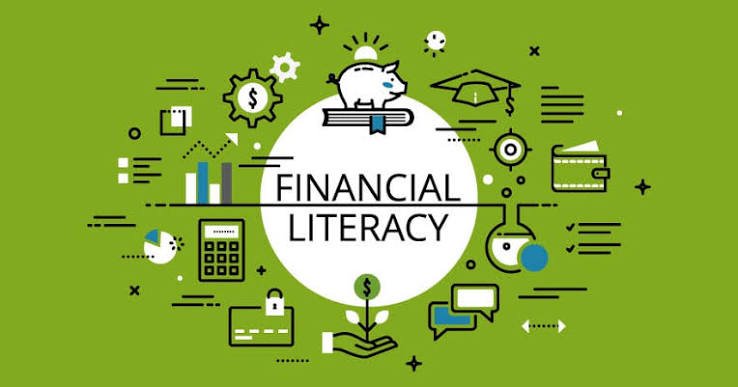
The world of investing is changing faster than ever. New technologies, changing consumer habits, global economic trends, and emerging industries are creating opportunities that were difficult to imagine a few decades ago. For people who want to build long-term wealth, understanding Future Investing can be an important part of making smarter financial decisions.
Future investing is not simply about finding the next company that might become successful. It is about understanding where the economy, technology, and society may be heading and positioning your investment strategy accordingly. At the same time, investors need to remember that every investment carries some level of risk, and no strategy can guarantee profits.
This guide explains what future investing means, why it matters, which areas may attract investors, and how beginners can approach long-term investing responsibly.
What Is Future Investing?
Future investing refers to investing with a long-term view of how industries, businesses, technologies, and economies may develop over the coming years. Instead of focusing only on what is popular today, investors examine trends that could shape tomorrow’s economy.
For example, artificial intelligence, renewable energy, electric transportation, biotechnology, cybersecurity, robotics, and digital infrastructure are areas receiving significant attention. Some of these industries may grow substantially, while others may fail to meet expectations. That uncertainty is one of the reasons research and diversification are so important.
The main idea behind future investing is simple: identify long-term changes early and invest in businesses or assets that could potentially benefit from those changes.
However, predicting the future is never easy. An exciting technology does not automatically mean every company connected to it will become profitable. Investors should evaluate financial performance, competition, management, valuation, debt, and broader economic conditions before making decisions.
Why Is Future Investing Becoming Important?
Consumer behavior and technology are evolving rapidly. Businesses that once relied on traditional processes are adopting automation, cloud computing, artificial intelligence, and digital services. At the same time, governments and companies are investing heavily in energy transformation, infrastructure, healthcare, and advanced manufacturing.
These developments can create new investment opportunities.
Another important factor is the increasing availability of investment information. Individual investors can now research companies, compare funds, follow economic data, and build diversified portfolios more easily than in the past.
Still, easier access to financial markets does not remove investment risk. Markets can experience sharp declines, and individual companies can lose significant value. Future investing should therefore be approached as a long-term strategy rather than a method for making quick money.
Key Areas to Watch in Future Investing
There are several industries that could play an important role in the global economy over the next decade.
1. Artificial Intelligence
Artificial intelligence has moved from being primarily a research concept to a technology used across many industries. Companies are using AI for customer service, data analysis, software development, manufacturing, marketing, healthcare, and other applications.
Future investors may look beyond individual AI companies and consider the broader ecosystem. Semiconductor manufacturers, data centers, cloud platforms, networking companies, and software providers can all benefit from increasing demand for AI infrastructure.
However, investors should avoid assuming that every company using the word “AI” in its business description will succeed. Valuations and actual earnings potential still matter.
2. Renewable Energy
The global transition toward cleaner energy is another major long-term trend. Solar power, wind energy, battery storage, electric vehicles, and energy-efficient technologies are receiving substantial investment.
Companies involved in renewable energy may benefit from technological improvements and increasing demand for alternative energy sources. At the same time, this sector can be affected by government policies, interest rates, commodity prices, supply chains, and competition.
For this reason, investors should study individual companies or diversified funds carefully rather than investing solely because an industry appears promising.
3. Healthcare and Biotechnology
Healthcare is another area with significant long-term potential. Aging populations, advances in medical research, personalized medicine, medical devices, and biotechnology could transform healthcare over time.
Biotechnology can offer substantial growth opportunities, but it can also involve considerable risk. A company developing a promising treatment may face regulatory challenges or unsuccessful clinical trials.
Investors who are interested in this area should understand that high potential returns can come with high uncertainty.
4. Cybersecurity
As businesses move more of their operations online, protecting digital information becomes increasingly important. Cyberattacks can affect companies, governments, financial institutions, and individuals.
This creates demand for cybersecurity software, cloud security, identity protection, and other digital defense technologies.
Cybersecurity may therefore remain an important part of the digital economy. Investors can explore individual companies as well as diversified investment funds that provide exposure to the broader technology sector.
5. Robotics and Automation
Automation is changing manufacturing, logistics, warehouses, agriculture, healthcare, and other industries. Robots can perform repetitive tasks, improve efficiency, and help businesses manage labor shortages.
As technology improves, automation could become more common in both industrial and consumer applications.
Investors interested in this trend should consider the companies developing robotics technology as well as businesses supplying components, software, sensors, and related infrastructure.
How Beginners Can Start Future Investing
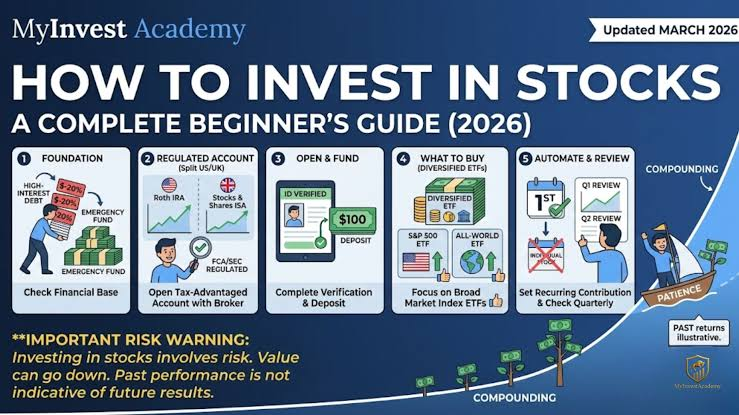
Beginning an investment journey does not require predicting which company will dominate the next 20 years. A more practical approach is to establish a strong financial foundation first.
Before investing, consider building an emergency fund and paying attention to high-interest debt. Having money available for unexpected expenses can reduce the need to sell investments during a market downturn.
Once a financial foundation is established, beginners can explore diversified investments such as broad-market index funds or exchange-traded funds. These can provide exposure to many companies rather than placing all of the money into one business.
Investors who want additional exposure to future-focused industries can consider allocating only a portion of their portfolio toward specific sectors. The appropriate percentage depends on an individual’s financial situation, time horizon, risk tolerance, and investment objectives.
The Importance of Diversification
One of the most important principles of future investing is diversification.
Imagine an investor puts all of their money into one emerging technology company because they believe its industry will transform the economy. Even if the industry succeeds, that particular company might struggle because of competition, poor management, regulatory problems, or financial difficulties.
Diversification reduces the impact of any single investment performing poorly.
A diversified portfolio may contain different companies, industries, geographic regions, and asset classes. The goal is not to eliminate risk completely but to avoid depending on one prediction being correct.
Long-Term Thinking Matters
Future investing works best when investors understand the difference between a long-term trend and a short-term market movement.
A promising industry can experience major price increases followed by dramatic declines. This does not necessarily mean the underlying technology has failed. Markets often react to expectations, economic conditions, interest rates, earnings reports, and investor sentiment.
Long-term investors can benefit from maintaining a disciplined approach rather than making emotional decisions whenever prices move.
For example, an investor who buys an asset because it is rising rapidly may panic when the price falls. Someone with a carefully planned strategy may be better prepared for normal market volatility.
Research Before You Invest
Good future investing requires research.
Before purchasing an investment, consider questions such as:
- What does the company actually do?
- How does it make money?
- Is revenue growing?
- Is the business profitable?
- How much debt does it have?
- Who are its competitors?
- Is its current valuation reasonable?
- What risks could affect its future?
- Does the investment fit your financial goals?
It is also useful to read financial statements and reliable company information rather than relying entirely on social media posts or online hype.
A trend can be real while an investment can still be overpriced.
Common Mistakes to Avoid
One of the biggest mistakes in future investing is chasing hype. New technologies often attract enormous attention, and investors may feel pressured to buy immediately because they are afraid of missing an opportunity.
Another mistake is investing money that may be needed soon. Stocks and other growth-oriented investments can decline unexpectedly. Money needed for rent, bills, education, or emergencies generally should not be exposed to unnecessary market risk.
Investors should also be careful about making decisions based solely on past performance. A company that performed exceptionally well in previous years may not deliver the same results in the future.
Finally, avoid believing anyone who promises guaranteed investment returns. Legitimate investing always involves uncertainty.
The Role of Patience in Future Investing
Building wealth usually takes time. Some of the most important investment advantages come from consistency, compounding, and allowing investments to remain invested for long periods.
For example, regularly investing a manageable amount over many years can potentially produce meaningful results because investment returns can themselves generate additional returns. The actual outcome, however, depends on market performance and the investor’s contributions.
Patience also helps investors avoid unnecessary trading. Constantly buying and selling based on short-term market predictions can increase costs and make it harder to maintain a consistent strategy.
What Could the Future of Investing Look Like?
The investment landscape will likely continue evolving. Digital financial services may become more accessible, artificial intelligence may influence financial research, and investors may gain access to new investment products and markets.
At the same time, traditional principles are unlikely to disappear. Understanding risk, diversification, valuation, financial health, and personal financial goals will remain important.
The most successful future investing strategy may not be about discovering a single revolutionary company. Instead, it may involve building a diversified portfolio that can adapt as the economy changes.
Final Thoughts
Future Investing is ultimately about preparing for long-term economic and technological changes while managing the risks that come with uncertainty. Artificial intelligence, renewable energy, biotechnology, cybersecurity, robotics, and other emerging industries could create important opportunities, but none of them guarantees investment success.
A sensible investor should focus on research, diversification, patience, and realistic expectations. Rather than trying to predict exactly what will happen tomorrow, investors can build strategies designed to participate in long-term growth while protecting themselves from unnecessary risks.
Whether you are a beginner or an experienced investor, the most valuable step is to understand what you are investing in and why. The future will always contain surprises, but a disciplined and informed approach can help you make better financial decisions as that future unfolds.
This article is for general educational purposes only and should not be considered personalized financial advice. Investment values can rise or fall, and you should consider your own circumstances and consult a qualified financial professional when appropriate.